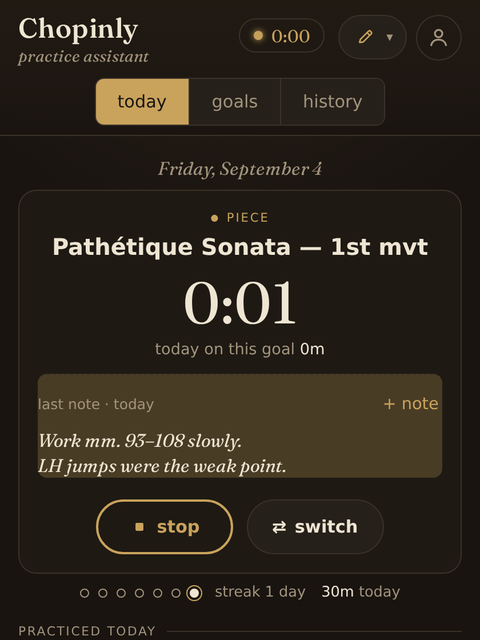
The clock is always on a goal
Press play, say what you're working on, and the time lands on that piece or technique. Switch mid-sitting and nothing gets lost.
 Chopinly
piano practice assistant
Choose something. Practice it.
See what you actually did.
free · no ads · works offline · optional account for backup · no tracking
Press play, say what you're working on, and the time lands on that piece or technique. Switch mid-sitting and nothing gets lost.
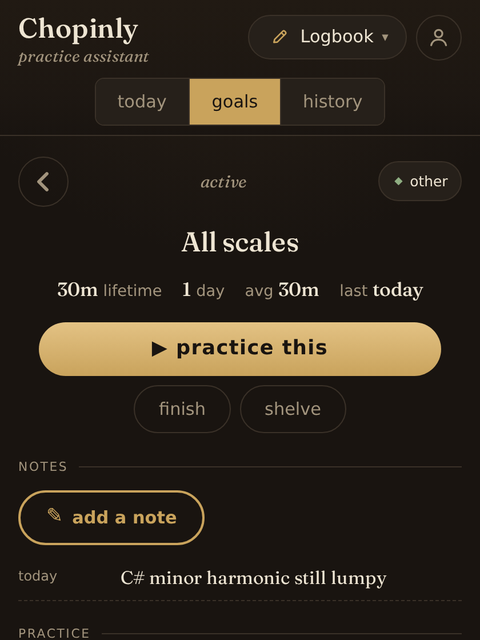
A running thread on each goal. The last note greets you the next time you press play, so you pick up where your hands left off.
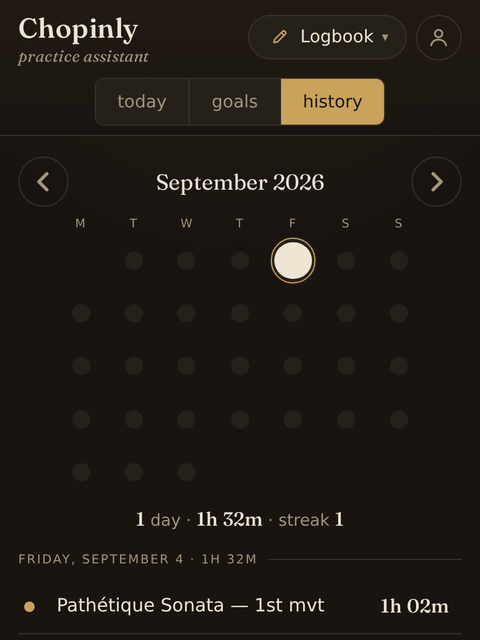
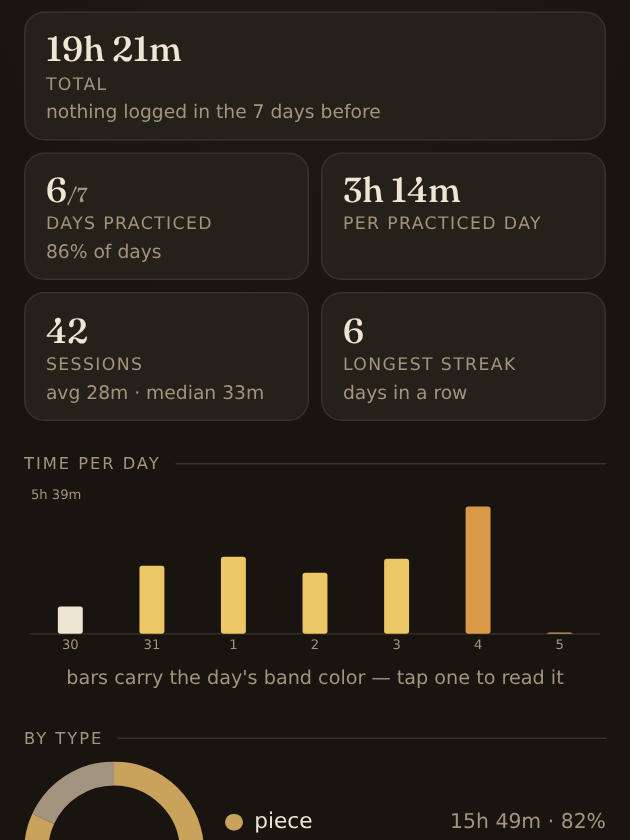
Today shows only what you practiced, with minutes per goal. The calendar keeps your streak and colors each day by how much you played, without a single form to fill in.
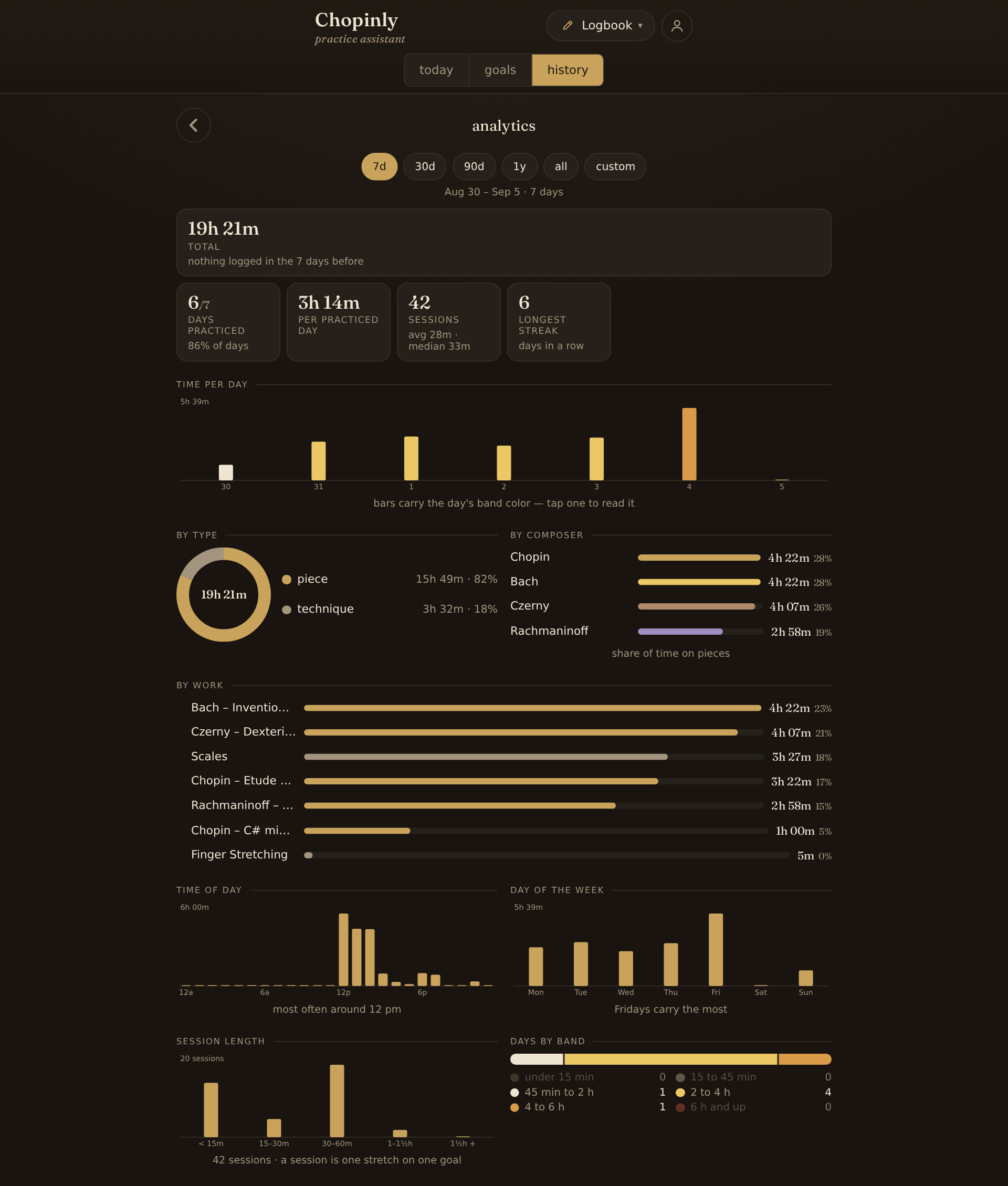
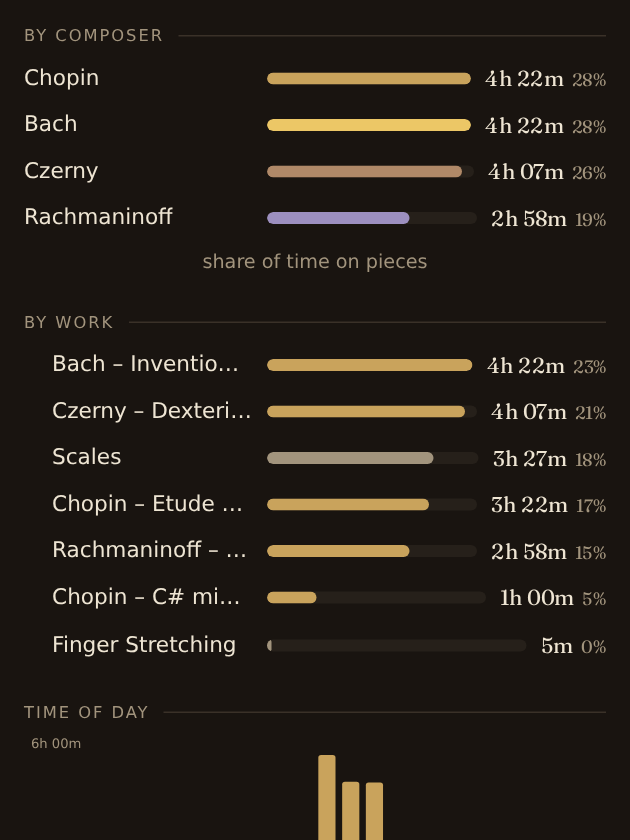
Any range. Time by composer, work and type; when in the day you practice, which weekdays carry the load, how long a session tends to run. Tap Bach and every chart recomputes for Bach.
Real writing about practicing the piano: how to structure a session, what a metronome is actually for, how long to practice, and how to hear what you play.
Most piano practice is playing through pieces and hoping. Here is what a session looks like when it is designed to change something: a goal, a small unit, slow and correct, then a test you can't fake.
A metronome is not there to make you play mechanically. It is there to tell you the truth about your rhythm. How to set the tempo, when to use subdivisions, why the off-beat click works, and when to switch it off.
Twenty focused minutes beats a distracted hour, and six short days beat one long one. What the research on practice actually says, how to set a daily amount you will keep, and how to know whether it is enough.
Chopinly is local first — it works with no account at all. Sign in with an email code to back it up and pick it up on another device. Export or delete everything any time. No password to remember, nothing to subscribe to.
Open Chopinly